How Modern Patient Flow Supported Safer Care Across Military Healthcare
July 14, 2026
July 14, 2026
Military hospitals and clinics serve active-duty service members, military families, retirees, and other beneficiaries across a complex healthcare network. Supporting this population requires more than delivering high-quality clinical care. Patients must also be able to arrive, check in, receive instructions, and move through each stage of their visit with clarity.
To support a more organized and patient-centered experience, the Defense Health Agency (DHA) expanded the use of its enterprise Patient Queuing and Notification System (ePQNS), Q-Flow. The system supports patient check-in, queue management, service notifications, and patient flow across military hospitals and clinics.
The Military Health System discussed the initiative in its December 5, 2023, article, “Enhancing Military Health Care: The Patient Queuing Notification System.” The article describes how enterprise queuing technology, including mobile check-in capabilities, is helping improve access to pharmacy and clinical services throughout the Military Health System.
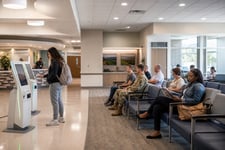
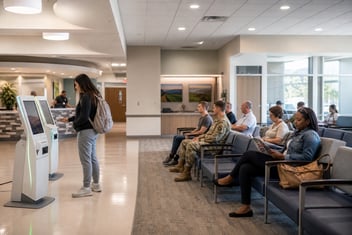
Traditional healthcare waiting environments can create uncertainty for patients and operational challenges for staff. Patients may arrive without knowing where to check in, where to go next, or how long they will need to wait. Crowded waiting areas can add frustration, while manual processes make it more difficult for staff to confirm arrivals and maintain an accurate order of service.
For military hospitals and clinics, these challenges are compounded by the size and geographic reach of the healthcare system. Individual facilities previously relied on locally hosted system environments, creating a need for a more consistent and scalable enterprise approach.
The DHA needed a patient queuing and notification system that could simplify check-in for appointments and pharmacy services, provide clear instructions throughout the patient journey, maintain an organized order of service, give staff visibility into patient arrivals, offer alternatives to waiting in crowded areas, and connect with the Military Health System’s broader technology environment.
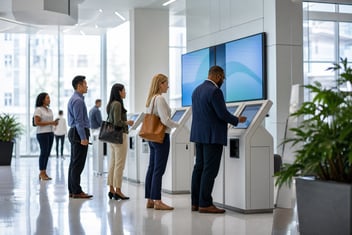
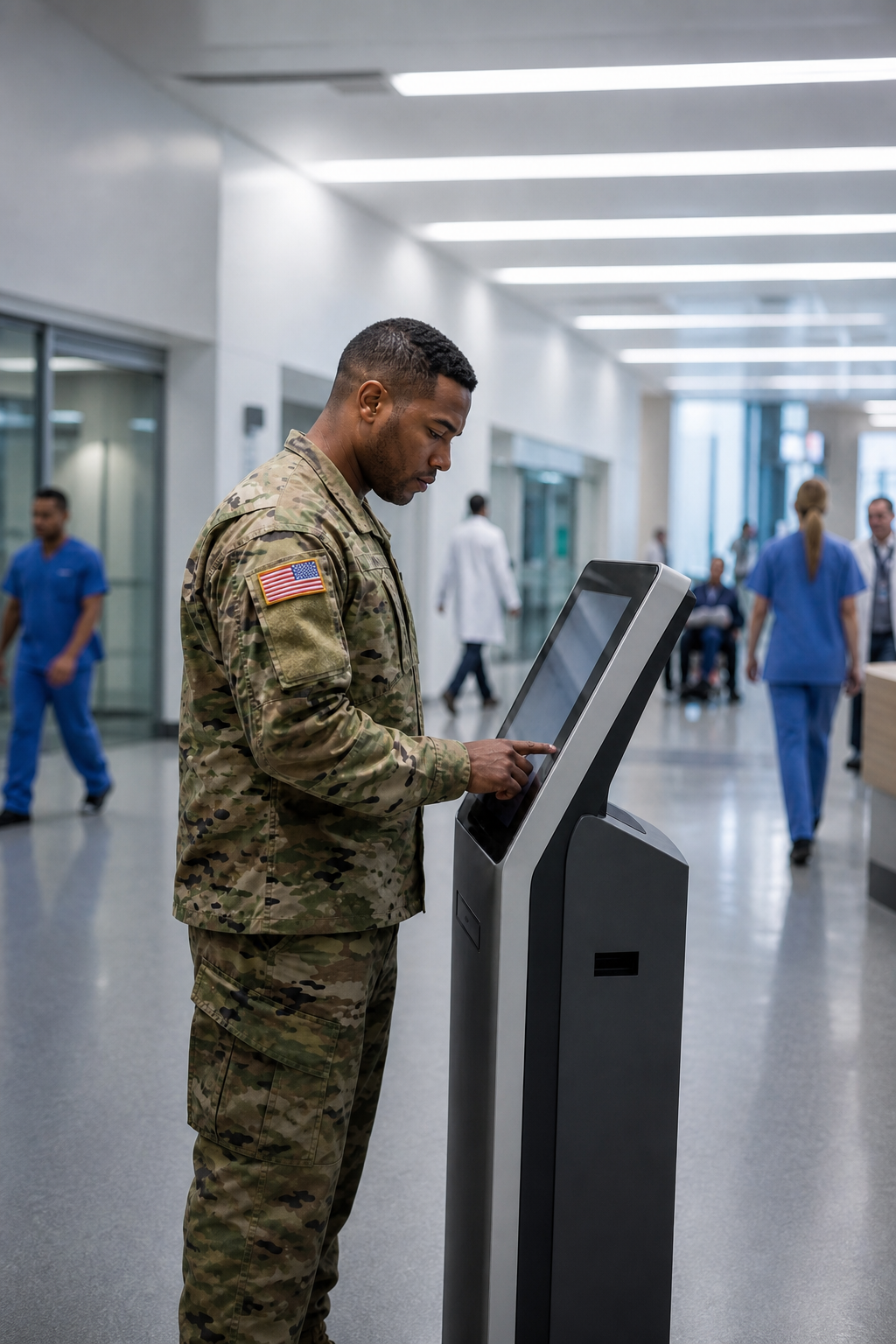
ACF Technologies’ Q-Flow platform provides a digital framework for managing patient arrivals, queues, and service progression. At participating military hospitals and clinics, patients can access the system through self-service kiosks and supported mobile channels using the Q-Anywhere App.
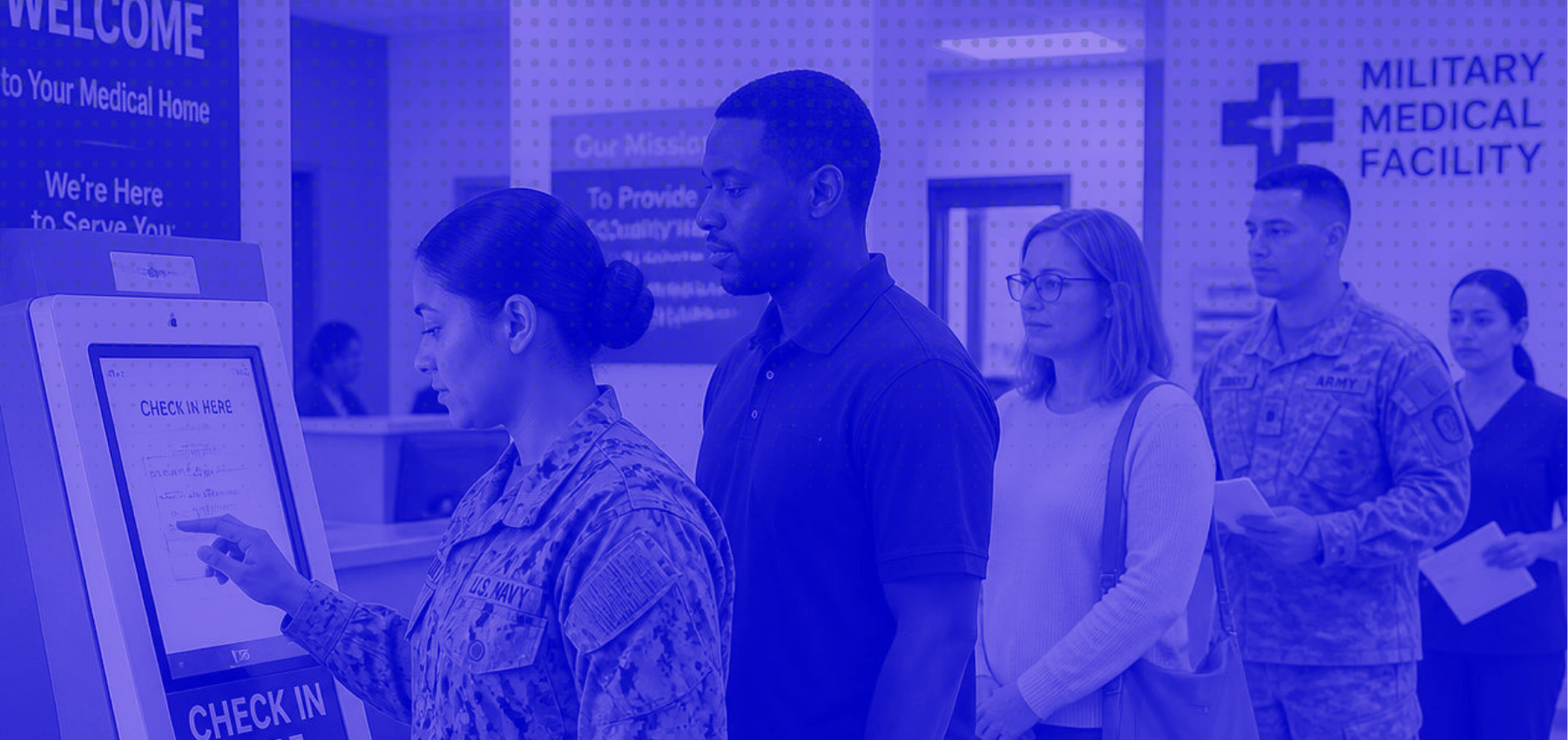
Patients can scan their military identification card at a kiosk or enter their information through the app to check in for a pharmacy visit or clinical appointment. The system confirms their arrival, assigns their place in line, and provides instructions directing them to the appropriate next step.
Staff receive notification of the patient’s arrival and can place the patient into the correct workflow based on the service required. This creates a more structured connection between patient arrival and service delivery while reducing reliance on fully manual front-desk processes.
The implementation and modernization of Q-Flow has supported a more structured, flexible, and patient-centered approach to service delivery across military hospitals and clinics.
Patients have greater clarity when beginning their visits and more flexibility in how and where they wait. Digital instructions help patients understand where to go next, while mobile access provides an alternative to remaining in a crowded waiting room throughout the entire process.
Staff gain timely visibility into patient arrivals and current service demand. Organized queue placement helps teams identify who is waiting, understand the service each patient requires, and move patients through the appropriate workflows more consistently.
At the enterprise level, the DHA migrated 120 hospital and clinic servers into five regionalized servers in 2023. This transition, combined with software and database upgrades, created a more standardized and scalable technology environment. The MHS GENESIS interface further strengthened the system’s ability to operate within the Military Health System’s broader clinical infrastructure.
The Military Health System article also referenced research demonstrating the potential value of electronic notification technology in time-sensitive clinical settings. In the cited study, the average check-in wait time for emergency department patients seeking influenza testing decreased by 27% when an electronic notification system was used.
Although this statistic is not a direct performance result from the DHA’s ePQNS implementation, it illustrates how faster digital check-in and notification processes may help patients enter appropriate clinical workflows more efficiently while limiting unnecessary time in shared waiting environments.
The standardization of Q-Flow across the Military Health System demonstrates how enterprise patient queuing and notification technology can support both patient experience and operational coordination.
By establishing a consistent framework for managing arrivals and service progression, the DHA has created an environment that can continue evolving alongside the needs of military hospitals, clinics, and the people they serve.
For service members, families, and retirees, this reflects a commitment to making healthcare visits clearer, more flexible, and more responsive. For healthcare teams, it provides a scalable foundation for coordinating patient flow across a large and complex network.
Is your organization looking to improve wait times and customer experience with intelligent queue management?