Modernizing DMV Access Through Real-Time Visibility with Q-Flow
April 21, 2026
April 21, 2026
A state department of motor vehicles serving a high-volume population sought to modernize how customers access services across its branch network. Operating in a complex, demand-driven environment, the agency faced increasing pressure to reduce wait time uncertainty, improve service predictability, and better distribute customer demand across locations. The goal was to create a more transparent, efficient experience for both customers and staff while maintaining control over daily operations.
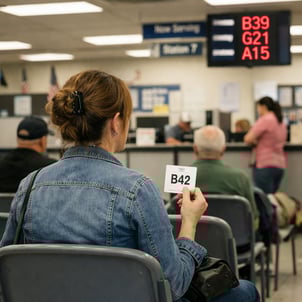
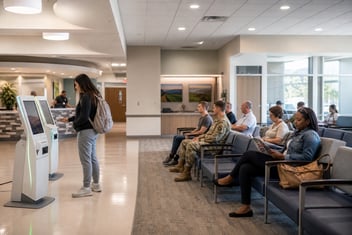
The agency’s existing service model relied heavily on in-person visits without clear visibility into real-time conditions. Customers often arrived at offices without knowing current wait times or whether a location had reached capacity. This led to long lines forming early in the day, congestion during peak hours, and frustration when customers were turned away or experienced extended delays.
From an operational standpoint, staff had limited tools to communicate live service conditions across locations. Demand was unevenly distributed, with some offices overwhelmed while others remained underutilized. Without real-time insight into volume, service times, and capacity, it was difficult to proactively manage flow or guide customers toward better service options.
These challenges created inefficiencies across the service journey, increased pressure on frontline staff, and limited the agency’s ability to scale operations effectively as demand continued to grow.
To address these challenges, the agency implemented Q-Flow as the core platform for service orchestration, supported by Virtual Lobby capabilities and real-time operational visibility.
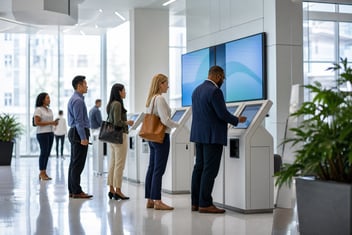
Q-Flow enabled the agency to capture and manage live service data across all participating locations, including current queue volumes, service times, and staff availability. This data powered a public-facing experience that allowed customers to view real-time wait times and capacity statuses before arriving.
Through the Virtual Lobby, customers could check the status of multiple locations, including whether an office was accepting walk-ins, experiencing high demand, or operating at capacity. This allowed individuals to make informed decisions about when and where to visit, reducing unnecessary travel and early arrival congestion.
Internally, staff leveraged Q-Flow to monitor service flow in real time, enabling more informed operational decisions throughout the day. The system provided a unified view of activity across locations, helping teams better understand demand patterns and respond accordingly.
The implementation focused on aligning digital visibility with in-person service delivery, creating a connected workflow that extended beyond the physical office and into the customer’s planning process.
The implementation of Q-Flow transformed how customers interact with DMV services and how staff manage daily operations. Customers gained the ability to plan visits based on real-time conditions, leading to fewer unnecessary trips and more predictable service experiences.
Offices experienced more balanced demand, with reduced overcrowding at peak locations and improved utilization across the network. Staff were better equipped to manage service flow, resulting in smoother operations and fewer disruptions throughout the day.
The shift from reactive, in-person queuing to proactive, data-driven planning improved overall efficiency while reducing frustration for both customers and employees. Service delivery became more transparent, consistent, and manageable at-scale.

By implementing Q-Flow, the agency moved from a fragmented, unpredictable service model to one grounded in real-time visibility and informed decision-making. Customers now approach their visits with clarity and confidence, while staff operate with greater control and awareness of system-wide conditions.
This transformation has created a more balanced and sustainable service environment, where demand is better managed, experiences are more consistent, and operations are aligned with the realities of modern public service delivery.
Is your organization looking to improve wait times and customer experience with intelligent queue management?