Advancing Accessibility and Inclusion in County Tax Services
March 16, 2026
March 16, 2026
County tax offices serve one of the broadest constituencies in local government. Property owners, small business operators, retirees on fixed incomes, new citizens, and individuals navigating language or mobility barriers all rely on the same service infrastructure. These interactions often involve financial obligations, deadlines, and documentation requirements, which means the experience itself carries significant weight. Designing services that work for this diverse population requires more than transactional efficiency. It requires thoughtful operational design that ensures every resident can access support with clarity and confidence.
Accessibility expectations across public services are also increasing. According to the United States Census Bureau, nearly one in four adults in the United States lives with a disability. In public facing tax environments, accessibility cannot be treated as a compliance requirement alone. It must be embedded into how services are structured, scheduled, and communicated. When access pathways are uneven, frustration grows and public trust weakens. When service systems are inclusive by design, agencies strengthen confidence while improving the reliability of service delivery.
Many county tax offices were originally built around in person counter service supported by paper documentation and sequential processing. While this model provides direct interaction between residents and staff, it can unintentionally create barriers for individuals whose circumstances do not align with traditional service structures.
Limited office hours may restrict residents who work during the day. First come first served queues can disadvantage individuals who cannot stand for long periods of time. Paper heavy processes may also create confusion for citizens navigating complex tax terminology, particularly for residents with limited English proficiency. According to the United States Census Bureau, more than 25 million people in the United States speak English less than “very well,” which can make traditional government forms and in person service instructions difficult to interpret. When essential information is difficult to understand, residents may struggle to complete required documentation or determine the correct service pathway. These structural limitations often result in extended lobby wait times, repeated visits, and uncertainty about how to complete required processes.
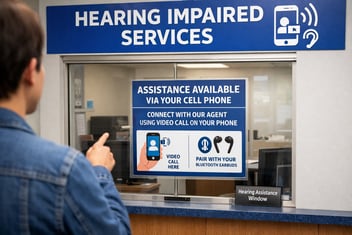
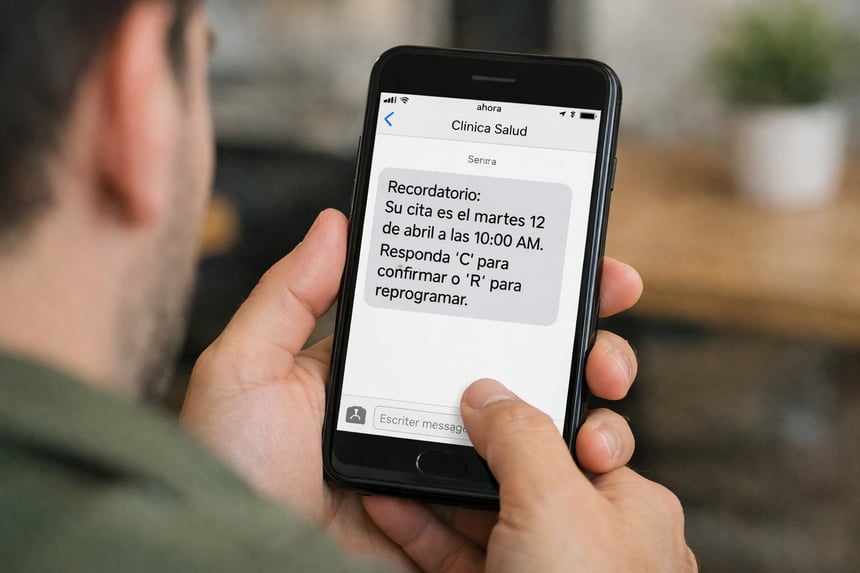
Expanding digital services alone does not fully solve these challenges. Online only scheduling can exclude citizens without reliable internet access. Phone systems that lack text or visual communication options may not accommodate individuals with hearing impairments. True accessibility requires multiple entry points into the service system so citizens can choose the method that aligns with their needs while agencies maintain operational stability.
Accessible service environments are built through operational structure rather than isolated accessibility features. When agencies design systems that allow residents to enter the service journey through multiple pathways while maintaining coordinated workflows, both accessibility and efficiency improve.
Several operational capabilities consistently strengthen inclusive service environments:
These capabilities do not alter tax regulations or policies. Instead, they improve how residents interact with service systems. When entry points are flexible yet structured, accessibility becomes a natural outcome of the service design.
Multichannel engagement is particularly important in county tax environments. Seniors may prefer scheduling by phone with assistance from staff. Working citizens often rely on online booking outside of standard office hours. Individuals coordinating transportation or accessibility support may need predictable appointment windows. A unified service structure that supports these variations strengthens equity while preserving operational clarity for staff.
Accessible public services rely on operational systems that coordinate appointments, communication, and queue management across multiple engagement channels. When agencies gain visibility into service demand and resident arrival patterns, they can design environments that accommodate diverse needs without creating operational instability.
Accessibility influences how citizens perceive the fairness and reliability of government services. When people encounter systems that respect their time, mobility, and communication needs, interactions with public institutions become less stressful and more predictable. This perception of fairness strengthens long term confidence in local government.
County tax offices that invest in structured service systems also gain valuable operational insight. Agencies can identify demand patterns, understand appointment attendance trends, and recognize where additional guidance or language support may be needed. These insights allow leadership teams to refine service design without altering tax policy or regulatory requirements.
Designing inclusive service environments ultimately reinforces the core purpose of county tax offices. Citizens arrive seeking clarity, resolution, and fairness during interactions that often involve financial pressure. When accessibility is embedded into appointment management, communication systems, and service routing, agencies create experiences that reflect the principles of transparency and accountability that public institutions are expected to uphold.
The future is now, and it begins with smarter decisions