Designing Accessible and Secure Public Service Systems
April 8, 2026
April 8, 2026
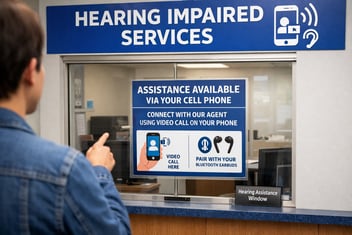
The demand for accessible government service systems continues to grow as agencies adapt to evolving ADA expectations and digital service requirements. Under the Americans with Disabilities Act, public services are required to be accessible across all touchpoints, increasing pressure on agencies to ensure compliance beyond just digital channels. This reinforces the importance of designing systems that support accessibility from the outset.
Modern service environments must balance accessibility with security, efficiency, and scalability. Achieving this balance requires a coordinated approach to service design that connects systems and aligns processes across the full journey.
Public service delivery involves handling sensitive information while ensuring services remain accessible to all citizens. This creates a dual requirement. Systems must be secure and compliant while also being usable across a wide range of needs.
When accessibility and security are addressed separately, gaps emerge. Secure systems may become difficult to navigate, while accessible systems may lack the controls needed to protect data. Aligning these priorities is essential for modern service environments.
Accessible service delivery is achieved through intentional system design. This includes how services are structured, how data flows between systems, and how interactions are managed across channels:
Structured systems ensure that accessibility is maintained across every interaction. By aligning processes and connecting data, organizations can create more consistent and reliable experiences.

Accessible service delivery is not a static goal. It requires continuous alignment between systems, processes, and evolving expectations. Organizations that invest in structured service design are better equipped to adapt to these changes.
By integrating accessibility and security into the foundation of service delivery, agencies can create environments that are both resilient and inclusive. This approach supports long-term operational success while ensuring services remain accessible to all citizens.
The future is now, and it begins with smarter decisions.