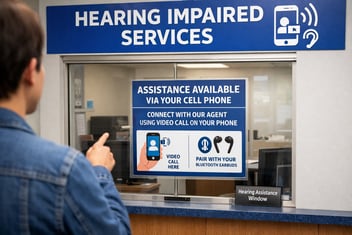
Optimizing Patient Flow in Federal Healthcare Systems
March 2, 2026
March 2, 2026
Federal healthcare systems are operating under sustained structural pressure. Facilities serving Veterans and Tribal communities manage complex eligibility requirements, specialty referrals, pharmacy demand, and unpredictable walk-in volumes. According to the American Hospital Association, nearly 70 percent of hospitals report ongoing staffing shortages that directly affect patient throughput and service efficiency. In federally funded environments, where accountability and reporting requirements are layered onto daily operations, the impact of these shortages is magnified.
Patient flow is no longer a background operational concern. It directly shapes trust and experience. Long waits, unclear routing, and inconsistent communication create friction before clinical care even begins. For staff, fragmented workflows increase cognitive load and reduce time spent on direct patient interaction. Improving patient flow today is about operational reliability. It is about structuring the journey from arrival through service completion in a way that protects clinical capacity, strengthens confidence, and creates a consistent experience across locations.
Federal healthcare delivery has evolved beyond traditional appointment models. Hybrid care, coordinated referrals, specialty clinics, and pharmacy integration all contribute to a service environment that is no longer linear. Patients may move between departments in a single visit. Digital pre-registration may not align with on-site intake. Staff must coordinate across clinical and administrative teams while maintaining documentation integrity.
This complexity creates invisible friction. Bottlenecks form in lobbies without leadership visibility. Staff rely on manual tracking methods that fragment information. Walk-in demand competes with scheduled care in ways that disrupt planned capacity. Without structured orchestration, variability becomes the norm, and variability erodes both trust and operational predictability.
Modern federal healthcare operations must support coordinated journeys across physical and digital touchpoints while maintaining visibility at every stage. Structured workflow and intelligence capabilities create stability in environments where variability is constant.
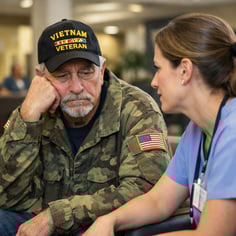
Operational variability is not neutral. A 2023 Press Ganey analysis found that perceptions of wait-time and coordination are among the strongest predictors of overall patient satisfaction and trust. This matters operationally because workflow inconsistency can undermine confidence regardless of clinical quality. When arrival processes feel disorganized or handoffs lack clarity, patients interpret that friction as a signal about reliability.
ACF addresses this challenge by aligning real world service movement with governed operational structure and continuous insight. Q-Flow organizes appointments, arrivals, and routing so that patient progression remains visible and coordinated across teams. Neuro evaluates demand patterns and emerging bottlenecks, helping leaders prioritize intervention before friction compounds. Together, they translate patient movement into measurable operational signals, allowing healthcare organizations to reduce unpredictability while strengthening experience consistency.
Structured orchestration creates alignment between patient movement, staff coordination, and leadership visibility. It transforms fragmented service events into connected journeys that can be monitored, analyzed, and improved over time.
Improving patient flow requires more than reducing wait times. It requires designing for stability under pressure. When workflows are intentional and data-informed, variability decreases. Staff coordination improves. Leadership gains visibility needed to anticipate demand rather than respond to disruption.
Facilities that treat patient flow as a governed journey rather than a series of isolated tasks are better positioned to protect clinical time, strengthen trust, and deliver equitable care experiences.