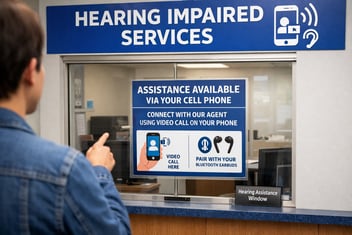
Queue management systems (QMS) can significantly improve court efficiency, optimizing operations while providing valuable data insights that strengthen long-term service delivery and satisfaction for both visitors and staff. Keep reading to learn more.
Across government services, efficiency and streamlined processes are increasingly expected. Court systems, however, often struggle with long wait times and the frustration experienced by both visitors and staff. As demand for improved service delivery grows, courts can greatly benefit from implementing advanced queue management systems (QMS).
For example, the National Centre ofState Courts reports that technologies such as digital check-in, queuing, and wayfinding can improve operational efficiency, increase productivity, and create a more user-friendly environment that strengthens public confidence.
Let’s explore how queue management technology improves the experience for both court users and staff.
Reducing wait times
One of the most common challenges in court systems is managing long lines and delays, particularly during busy court sessions. Queue management systems help organize and control the flow of people through the building.
By assigning visitors to virtual queues and enabling check-ins through kiosks, mobile apps, or digital signage, courts can significantly reduce congestion and ensure individuals are served more efficiently.
For court users, this creates a more convenient experience. Instead of waiting in crowded hallways, individuals can receive alerts via SMS or mobile notifications indicating when to approach their assigned service counter or courtroom.
Improved communication
Clear communication is essential in any public service environment, and courts are no exception. Queue management systems allow courts to provide real-time updates to visitors regarding delays, schedule changes, or hearing status updates.
This transparency reduces confusion and helps maintain a calmer environment for visitors, legal professionals, and court personnel alike. Multilingual capabilities further enhance accessibility, enabling courts to serve diverse populations more effectively through inclusive tools.
Automated messaging also reduces the number of inquiries staff must handle, allowing employees to focus on case management and administrative responsibilities rather than answering repetitive questions.
Enhanced operational efficiency for staff
Court staff handle numerous responsibilities, from case coordination to assisting visitors. A queue management system helps automate routine administrative tasks such as visitor registration, directing individuals to appropriate service areas, and monitoring case progress.
This automation enables staff to focus on high-priority responsibilities, improving overall court productivity. Staff can also monitor visitor flow in real time, allowing them to adjust resources dynamically and ensure that no department becomes overwhelmed.
Data insights for continuous improvement
Queue management systems provide more than operational improvements—they also generate valuable insights that support long-term optimization.
By analyzing data such as wait times, peak traffic periods, and visitor feedback, court administrators can identify service bottlenecks and improve resource allocation.
For instance, if analytics reveal consistent delays during certain times of the week, courts can proactively adjust staffing schedules or extend service hours to improve efficiency and reduce congestion.
In conclusion: a better experience for everyone
Implementing a queue management system allows courts to create a more organized and efficient environment for both visitors and staff.
Court users benefit from reduced wait times, clearer communication, and a more predictable experience. Staff members gain better visibility into operations and tools that streamline administrative tasks, allowing them to focus on delivering high-quality public service.
By investing in queue management technology, courts modernize their operations while improving satisfaction, efficiency, and accessibility across the justice system.
Ready to see this in action? Schedule a demo to experience how our QMS works, or contact us to learn more.