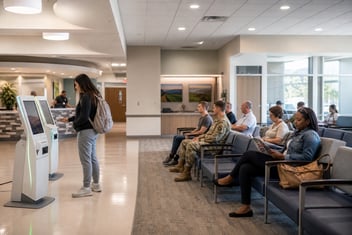
Modernizing Appointment Access Across Saskatchewan Health Authority Clinics
September 29, 2026
September 29, 2026
The Saskatchewan Health Authority (SHA) is the largest healthcare organization in the province of Saskatchewan, Canada, responsible for delivering a wide range of clinical and public health services across numerous communities. In 2021, the organization faced an unprecedented challenge as it prepared to launch a province-wide COVID-19 vaccination campaign. Millions of residents required timely access to vaccination appointments, yet the existing scheduling model relied heavily on manual processes through call centers and clinic staff.
To support this urgent public health effort, SHA partnered with ACF Technologies to implement an intelligent digital scheduling system capable of handling complex eligibility rules and large volumes of appointments. The goal was to provide patients with a self-service platform for booking vaccinations and laboratory tests while giving staff the operational visibility and tools needed to manage appointments efficiently across approximately 70 clinics throughout the province.

Prior to the implementation of ACF technologies, appointment scheduling within SHA clinics was handled manually. Patients could only schedule appointments by calling a clinic or contacting a call center, creating a labor-intensive process that depended heavily on staff availability and manual coordination. As demand for COVID-19 vaccinations rapidly increased, this approach quickly proved unsustainable.
The absence of an automated scheduling system created several operational difficulties. Appointment information was distributed across multiple clinics, often stored in spreadsheets or local systems, making it difficult for administrators to maintain a clear overview of capacity or demand. This fragmentation limited leadership’s ability to coordinate resources across the province and made it challenging to respond quickly to changing vaccination guidelines.
Patients also experienced limitations under the previous model. Scheduling required calling during business hours or visiting clinics in person, which created barriers for many residents. During the early stages of the pandemic, when vaccination demand was at its highest, call centers faced significant pressure as patients attempted to secure appointments.
As the province prepared to distribute millions of vaccine doses, SHA recognized that a scalable, automated scheduling platform was essential. The organization needed a system that could guide patients through eligibility requirements, manage appointment capacity across dozens of clinics, and provide centralized visibility into vaccination operations.
To address these challenges, SHA implemented Q-Flow with Online Appointment Booking System (OABS), supported by Q-Anywhere and Connect for automated communications. The system introduced a fully digital approach to appointment scheduling while maintaining compatibility with existing clinic workflows.
Patients interact with the platform primarily through a web-based booking interface. By visiting the scheduling portal, patients can follow a guided process to select the appropriate service and book an appointment at a participating clinic. The system uses complex rule-based filters to ensure that available appointments match provincial eligibility requirements, including factors such as age group, vaccine dose intervals, and laboratory test selection.
Q-Anywhere functionality allows patients to manage their appointments remotely through Check-In Anywhere and Wait Anywhere features, reducing the need for on-site check-in infrastructure. Instead of relying on kiosks or ticketing systems, patients receive updates and reminders through digital channels and arrive at the clinic prepared for their scheduled visit.
Clinic staff use the Q-Flow web interface to monitor daily schedules, manage appointment capacity, and coordinate service flow within their locations. Centralized administrators can view appointment availability across clinics, allowing them to adjust scheduling capacity and respond to demand fluctuations during vaccination campaigns or seasonal service peaks.
In addition, Connect enables automated SMS and email notifications that confirm appointments, provide reminders, and communicate updates to patients. This communication layer helps ensure that patients remain informed throughout the scheduling process while reducing the administrative burden associated with manual follow-up.
The implementation of Q-Flow and OABS created measurable improvements in scheduling efficiency and operational coordination across SHA clinics.
Appointment scheduling time was significantly reduced as patients moved from manual booking methods to automated self-service scheduling. The system successfully handled large volumes of vaccination appointments during emergency public health timelines, enabling the province to distribute vaccines efficiently across multiple clinics.
Approximately 70 clinics now operate under a unified scheduling system, allowing administrators to view appointment demand and capacity from a centralized platform. This level of visibility was not previously available and has improved the organization’s ability to manage service availability during periods of high demand.
Call center workload decreased substantially as more patients began booking appointments online. Automated reminders also helped reduce missed appointments by ensuring that patients receive timely notifications about upcoming visits.
Beyond the operational efficiencies, staff reported that workflows became more predictable and easier to manage. Patients gained the flexibility to schedule appointments at any time, and clinic teams benefited from consistent scheduling structures and improved daily planning.


The introduction of digital scheduling and queue management tools transformed how the Saskatchewan Health Authority coordinates appointments across its clinics. Patients now have a clear and accessible way to schedule vaccinations and laboratory services, while staff benefit from improved visibility and standardized workflows.
By establishing a centralized scheduling platform, SHA created a more predictable and scalable operational model. Clinics across the province now operate under consistent processes that support both routine services and large-scale public health initiatives.
As healthcare needs continue to evolve, the system provides a flexible digital foundation that can support new services, seasonal programs, and future population-wide initiatives. This transformation has strengthened both the patient experience and the operational stability of clinics throughout Saskatchewan.
Is your organization looking to improve wait times and customer experience with intelligent queue management?